
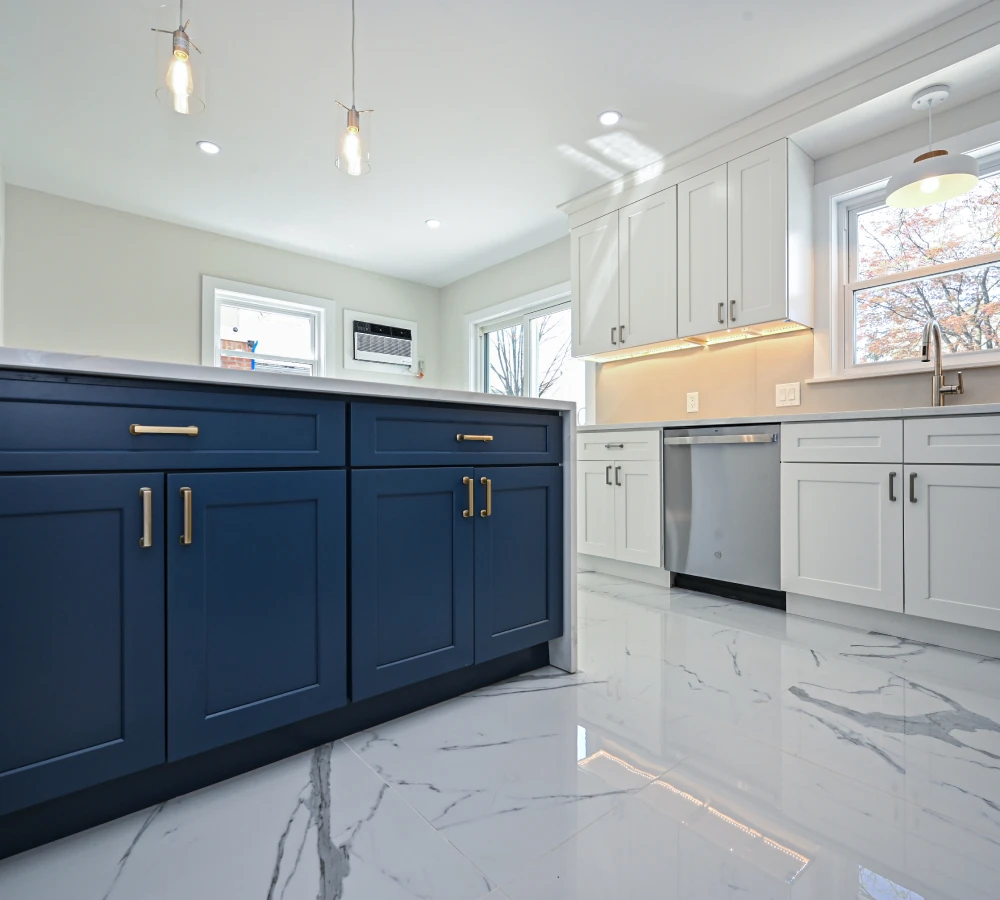
- The Hidden Structural Realities: Pre-war floor leveling and essential acoustic soundproofing often consume significant budget before finishes are even selected.
- The Co-op Board Factor: Alteration agreements, strict work hours, and mandatory insurance requirements extend timelines and increase labor costs.
- The Price of Craftsmanship: Custom millwork, tailored cabinetry, and precise stonework define luxury but require specialized artisans and meticulous execution.
Every week, we sit down with homeowners across Manhattan, Brooklyn, and Queens who are shocked by the initial estimates for their apartment renovations. The secret question they are asking is always the same: “Why does it cost so much to renovate an apartment that is already built?” It is a completely fair question. When you look at inspiration photos online, you see the beautiful marble countertops and custom European oak flooring.
What you do not see are the complex, distinctly New York City challenges hiding behind the plaster. As a full-service residential and light commercial general remodeling company navigating these exact challenges daily, we want to pull back the curtain. We are going to explain exactly what drives the cost of a high-end renovation in this city, focusing on the structural realities, the regulatory hurdles, and the true cost of luxury craftsmanship.
The Hidden Impact of Pre-War Building Conditions
When you purchase a pre-war co-op on the Upper West Side or a historic Brooklyn townhouse, you are buying charm and history. Vamp Renovations specializes in co-op and condo renovations throughout NYC, with deep expertise in navigating the unique challenges these properties present. You are also buying decades of structural settling and outdated mechanical systems. One of the most significant, yet rarely discussed, cost drivers in a New York City renovation is floor leveling. In older buildings, unlevel floors are practically a universal reality. Long-span wood joists bow over time, creating noticeable slopes.
Leveling a floor is not a simple patch job. It requires a tailored structural approach for every room. This process directly impacts other design elements. Raising a floor to make it level reduces your ceiling height, which is already a premium commodity in many apartments. It also dictates stair risers, door clearances, and cabinetry heights. If you choose not to level the floors to save money, your custom built-ins must be scribed to match the slope, which increases fabrication costs.
Beyond the floors, the walls themselves often require extensive work. Cracked plaster walls are common and demand skilled skim coating or specialized plaster treatments to achieve a flawless finish. Our drywall and plaster services address these foundational issues with precision and care. Outdated electrical panels must be upgraded to handle modern appliance loads, and aging plumbing stacks frequently need replacement. As a full-service general contracting firm, we coordinate all of these mechanical upgrades seamlessly within the larger renovation scope. These foundational repairs ensure your investment is secure, but they represent a substantial portion of the budget that remains entirely invisible once the project is complete.
The True Cost of Navigating Co-op Boards and the DOB
New York City has the most complex regulatory environment for residential construction in the country. Before a single hammer swings, your project must navigate a maze of approvals. If you live in a co-op, the building’s alteration agreement dictates everything from the specific plumbing fixtures you can use to the exact hours work is permitted. These agreements often require extensive architectural plans and stringent insurance coverage from your construction team.
The timeline for securing these approvals directly impacts your costs. Co-op boards and their reviewing architects frequently request multiple rounds of adjustments. Furthermore, any project involving structural changes, plumbing, or electrical work requires permits from the NYC Department of Buildings (DOB). If your building is in a historic district, you add the Landmark Preservation Commission (LPC) to the approval list.
The logistical constraints imposed by these bodies drive up labor costs significantly. Strict noise ordinances and limited working hours mean projects take longer to complete. Narrow streets, restricted parking, and service elevator limitations dictate the daily rhythm of material deliveries and waste removal. A contractor cannot simply pull a truck up to your front door; every logistical step requires careful coordination and added time, which translates directly to higher project costs.
The Essential Investment in Acoustic Performance
Noise complaints in New York City have reached record levels, making acoustic performance a critical livability condition rather than an optional luxury. Footsteps from the apartment above or conversations through shared walls can quickly ruin the experience of a newly renovated space. Addressing these acoustic challenges is a major factor in high-end renovation budgets.
Most NYC condo and co-op boards now mandate the installation of sound-attenuating underlayment beneath any new flooring. This is the baseline requirement. For serious impact noise mitigation, especially in older buildings, more comprehensive solutions are necessary. These can include decoupled ceiling systems utilizing hat channels, rubber membranes, and mass-loaded vinyl.
Shared walls often require soundproof sheetrock and specialized acoustic insulation. Each of these interventions adds material costs and requires specialized labor to install correctly. More importantly, robust soundproofing solutions consume valuable space, often reducing ceiling heights by several inches. We always advise our clients to treat soundproofing as a foundational site condition to be solved during the design phase, rather than a problem to be tolerated after move-in.
The Premium for Custom Craftsmanship and High-End Materials
The defining characteristic of a luxury renovation is customization. Standard, off-the-shelf solutions simply do not fit the unique dimensions and aesthetic demands of high-end NYC apartments. Custom millwork, including handcrafted kitchen cabinetry, built-in entertainment centers, and tailored bathroom vanities, often accounts for a significant percentage of the total renovation budget. Our finish carpentry team specializes in these bespoke installations.
This level of customization requires highly skilled artisans. The craftsmanship involved in precision-cutting statement stone slabs or executing intricate carpentry does not come cheap. These one-of-a-kind elements take time to fabricate and install, extending the overall project timeline.
The materials themselves also drive costs. Statement stone slabs like Calacatta or Taj Mahal marble require careful sourcing and expert installation. Restored herringbone wood floors or premium wide-plank European oak demands meticulous labor. When you factor in specialized treatments like zellige tile backsplashes or heated floor systems, the material and labor costs escalate rapidly. These choices elevate the aesthetic and longevity of the space, but they require a realistic understanding of the investment required.
| Cost Driver | Typical Impact on Project | Hidden or Visible |
|---|---|---|
| Floor Leveling | Impacts ceiling height, cabinetry, and doors | Hidden |
| Acoustic Soundproofing | Reduces noise transmission; lowers ceilings | Hidden |
| Co-op/DOB Approvals | Extends timelines; increases administrative costs | Hidden |
| Custom Millwork | Defines luxury aesthetic; requires skilled artisans | Visible |
| High-End Materials | Ensures durability and premium finish | Visible |
Planning Your Renovation with Confidence
Understanding what drives the cost of a high-end NYC renovation is the first step toward a successful project. The structural realities of older buildings, the complex regulatory landscape, and the demand for premium craftsmanship all contribute to the final investment. By acknowledging these factors early, you can make informed decisions that align your vision with the realities of renovating in this city.
At Vamp Renovations, our architectural background allows us to anticipate these challenges before they become costly surprises. We utilize transparent project management systems to control costs and deliver clean, professional results. Whether you are planning a full apartment renovation, a kitchen remodel, a bathroom renovation, or a full home renovation, our team brings the same commitment to excellence. If you are ready to discuss the specific scope, building requirements, and planning for your NYC renovation, contact us to schedule a consultation with our team today.
Frequently Asked Questions
Do I really need to level the floors in my pre-war apartment?
While not always mandatory, unlevel floors impact the installation of custom cabinetry, doors, and baseboards. Addressing it early prevents compromised design choices and functional issues later.
Why does a co-op renovation take longer than a condo renovation?
Co-op boards require strict adherence to detailed alteration agreements, often involving lengthy review processes by their own architects before work can even begin.
Can I skip soundproofing to save money on my renovation?
Most NYC boards mandate basic sound-attenuating underlayment. Skipping additional soundproofing in shared walls or ceilings often leads to significant livability issues and noise complaints later.